Chat with our enrollment team at
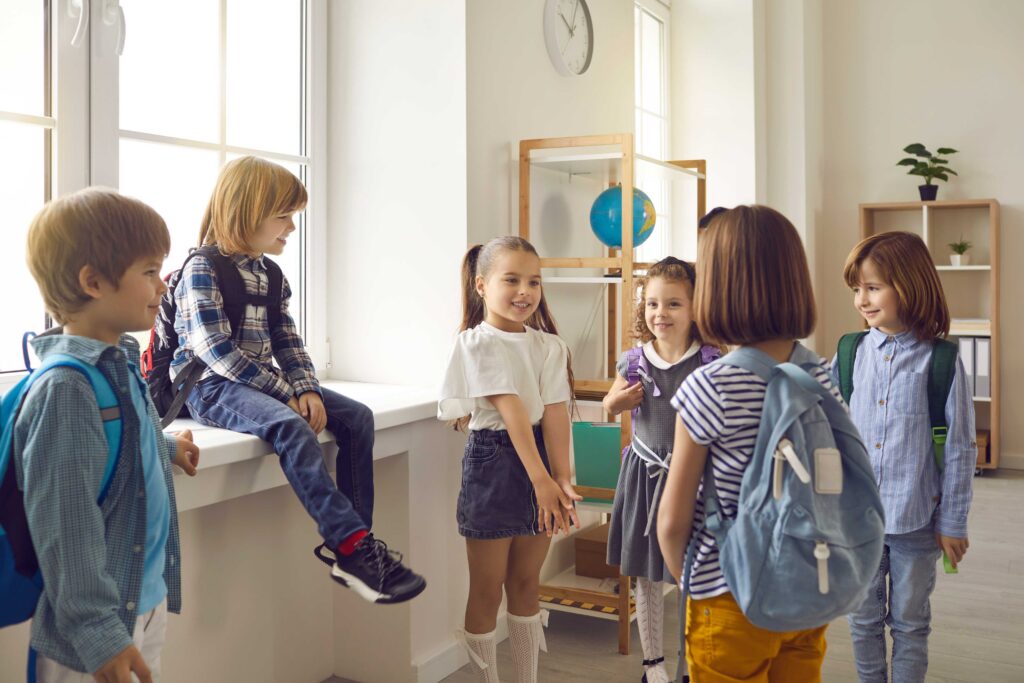







Getting into a conversation is harder than it sounds. Knowing when to jump in, how to keep things going, and when to wrap up are skills most children pick up gradually. For children who need more support, our ABA social skills groups in Lexington, MA offer a place to practice those moments. Sessions at Lexington Center for Children are built around real situations, not repetitive exercises, with therapists guiding the work in real time.
What Are ABA Social Skills Groups?
ABA social skills groups are small, therapist-led sessions where children practice social skills alongside peers, working toward similar goals. Each group is intentionally sized to allow for meaningful interaction without being overwhelming. Sessions are structured around specific, teachable skills built on the same evidence-based ABA principles that guide individual therapy at our center. Practicing with a real peer in a real moment is simply not something individual therapy can replicate on its own.
Groups are led by trained therapists under the supervision of a Board Certified Behavior Analyst (BCBA). Every session follows a consistent format, so children know what to expect. Predictability reduces anxiety, and lower anxiety means more learning. The goal is to build the kind of confidence that carries over into the hallway, the classroom, and the playground.
Skills Practiced in Our Social Skills Groups
The ABA social skills group curriculum is built around the skills that matter most in everyday life. Every goal is tied to what children actually encounter in real life. We focus on skills children can use the same day they leave a session. Here is what groups commonly cover:
- Starting and maintaining conversations: Knowing how to begin talking with someone, keep a conversation going, and wrap it up naturally
- Reading social cues: Recognizing facial expressions, body language, and tone of voice
- Taking turns and sharing: The building blocks of cooperative play and teamwork
- Making and keeping friends: Understanding what friendships look like and how to build them over time
- Managing emotions during interactions: Staying regulated when things get frustrating or unexpected
- Solving social problems: Navigating disagreements, misunderstandings, and tricky group situations
Goals are individualized within the group context. What one child is working on may look different from what their peer is practicing, even in the same session. The group environment is the tool. The individual plan is still at the center.
What a Session Looks Like
Each session starts the same way on purpose. A short warm-up gives children a chance to settle before anything is asked of them. Once they are ready, a therapist walks the group through what they will focus on that day, using straightforward language and visuals. Practice happens through activities, role-play, and peer interaction, with a therapist nearby to guide what comes next.
Toward the end, the structure loosens intentionally. Children get time to just talk and interact without a specific task attached. Some of the most useful moments for the clinical team happen right here. Watching how a child navigates an unscripted conversation tells the team more than a coached exercise can. Sessions close with a quick group check-in where children say what went well.
After each session, parents get a short summary of what was covered along with a few things to try at home. Nothing complicated. Knowing what your child practiced and responding to it in the same way at home is often all it takes to help a skill move from the clinic into real life. Our team makes that easy by keeping the guidance simple and specific to your child.
Who Benefits From Social Skills Groups
ABA social skills groups are a strong fit for children working on peer interaction, communication, or emotional regulation. Children with autism spectrum disorder are the most common participants. The groups are also a good fit for children with ADHD, developmental delays, and other neurodevelopmental differences. If your child struggles in group settings, this is exactly the kind of environment designed to help them practice those skills safely.
Children are matched to groups based on age, developmental level, communication style, and goals. The match matters. A well-matched group creates the conditions for real connection, not just skill practice. When children feel comfortable with their peers, they take more risks, try harder things, and build confidence faster.
How Social Skills Groups Fit Into Your Child’s ABA Program
For children already receiving individual ABA therapy at Lexington Center, social skills groups are a natural extension. Skills practiced one-on-one are tested in a group setting to ensure they will work in real life. For families joining the group without an individual program, our team can walk you through what a fuller approach might look like. Either way, the group is a meaningful step forward.
Social development does not happen in isolation. It happens in the context of relationships, routines, and repeated real-world practice. The group is part of a bigger picture, and our team supports it all. When individual therapy and group practice are aligned, the skills tend to show up in daily life much more quickly.
Start Building Social Confidence at Lexington Center
If your child is ready to practice social skills in a structured, supportive setting with real peers, we would love to talk with you. Reach out to learn more about our ABA social skills groups in Lexington, MA. We will help you figure out whether a group is the right fit for your child right now. There is no pressure to start the conversation.
Schedule a Consultation