







Your child stands at the bottom of the playground ladder while other kids are already at the top. They hang back, unsure where to place a foot or how far away the next rung is. Physical therapy in Lexington, MA, at Lexington Center for Children gives your child room to work out moments like this at their own pace. Our physical therapists build strength, balance, and coordination through play. Each session follows how your child moves today and what they want to do next.

What Is Pediatric Physical Therapy?
Pediatric physical therapy helps children move through their day with more comfort and join in active play. Physical therapists (PTs) work on whole-body movement, which means how your child gets around. Think of walking across a room, taking the school stairs, or getting up off the floor. Every plan starts with your child’s own strengths and needs.
Our neurodiversity-affirming physical therapy treats motor differences as part of how your child moves and experiences the world. A child who walks on a wide base or climbs with extra care isn’t doing anything wrong. We ask what feels safe and what your child wants to try. Then we build goals around comfort and confidence in the games your child already loves.
Areas We Support in Physical Therapy
Our physical therapy for kids covers six areas of whole-body movement:
- Gross motor skills: Walking, running, jumping, and climbing form the base of our gross motor skills therapy.
- Balance and coordination: Staying steady on uneven ground and moving arms and legs together in a game of tag.
- Strength and endurance: Building the energy to keep going through recess, a walk to the park, or a full school day.
- Motor planning: Figuring out how to climb, jump, or move through a space one step at a time.
- Safety and confidence: Judging distance, moving through a crowded hallway, and stopping with control.
- Playground and active play: Climbing, swinging, and ball games that make it easier to play alongside peers, including in our social skills groups.
Goals are individualized. Two children in the same week might work on very different things. One might practice stepping up onto a curb. Another might work on slowing down at the bottom of a slide. Your family’s priorities come first, and we adjust the plan as your child grows. We also ask where movement feels hardest day to day, such as the stairs at home or the walk into school.
What a Session Looks Like
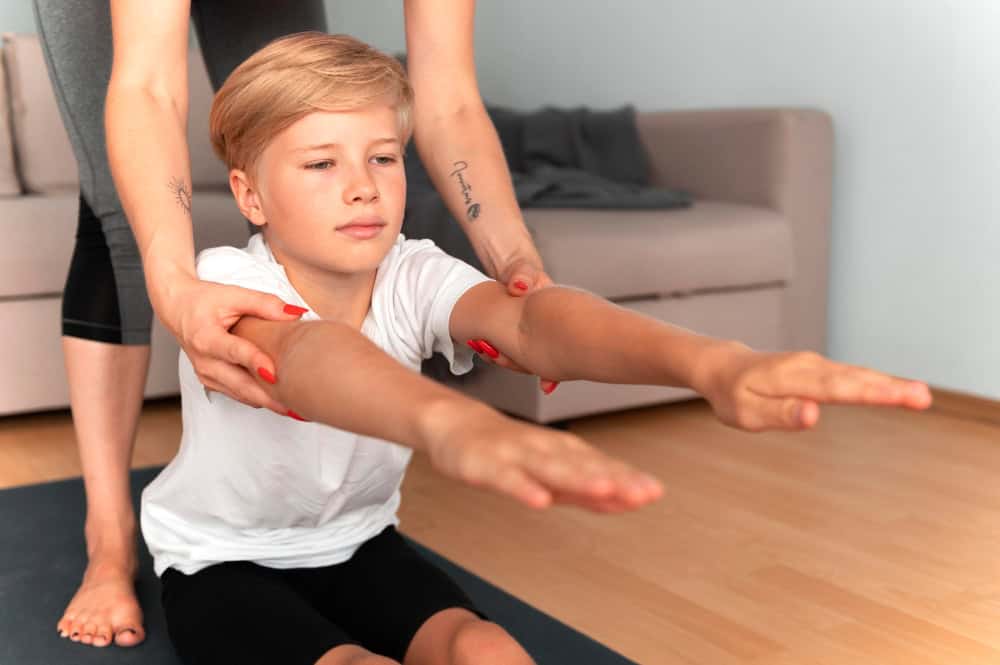
Physical therapy at our Lexington, MA center is a lot like recess. Each visit begins with a warm-up. Your child might power-walk, hop, or do stretches as they enter the therapy room while we ask what they’d like to play today. Next is exercising, disguised as games. During red light, green light, your child practices stopping with control. Strength is built with crab walks and bear crawls while your child sprints past you to the other side of the room.
If your child hops like a bunny to the exit, we turn it into the next game. We wind down at the end of each visit with some easy stretches and a chance to catch their breath. Your child tells us which game they enjoyed the most, and we start with that game next time.
You won’t be left guessing. After each session, your child’s therapist tells you what you worked on. You’ll also get one or two games to play at home, like a bear crawl race down the hallway. Our parent training adds more coaching if you want it.
Who Benefits From Physical Therapy
Physical therapy for autism supports the way your child already moves. Children with developmental delays, low muscle tone, or coordination differences benefit too, as do children with other developmental differences. According to a 2024 review in the Journal of Autism and Developmental Disorders, most studies found significant motor difficulties in 50% to 88% of children with autism. The studies used standardized assessments or functional questionnaires. Motor differences are common in autism, and support for movement belongs in your child’s plan.
Signs you might notice include reaching motor milestones later than expected, tripping or falling often, tiring quickly during play, and walking on tiptoes. Stairs, jumping, and climbing can feel hard. Some children start to avoid the playground or sports altogether. Any of these is a good reason to start a conversation with us.
How Physical Therapy Works Alongside ABA
Strength, coordination, and confidence built in physical therapy can make it easier to take part in ABA sessions at Lexington Center. A child who feels steady on their feet has more energy for the routines and practice that fill the day. Recess, group games, and the walk between rooms all require movement, so each one becomes easier to join. Moving with ease also helps with play alongside peers.
Physical therapy can sit next to speech therapy and occupational therapy, too. Each one adds a different piece to your child’s week. Comfort in movement carries across all of them, because a child who moves with ease has more room to focus on the next skill. Neurodiversity-affirming PT keeps the focus on what helps your child join in, wherever that happens.
Start Physical Therapy in Lexington, MA Today
Lexington Center for Children offers physical therapy in Lexington, MA for children who want to take part in the activities they enjoy. Contact us today to tell us how your child moves through a typical day and what they’d love to do more of. A member of our team will call you to talk through next steps. There’s no pressure to decide anything on that first call.